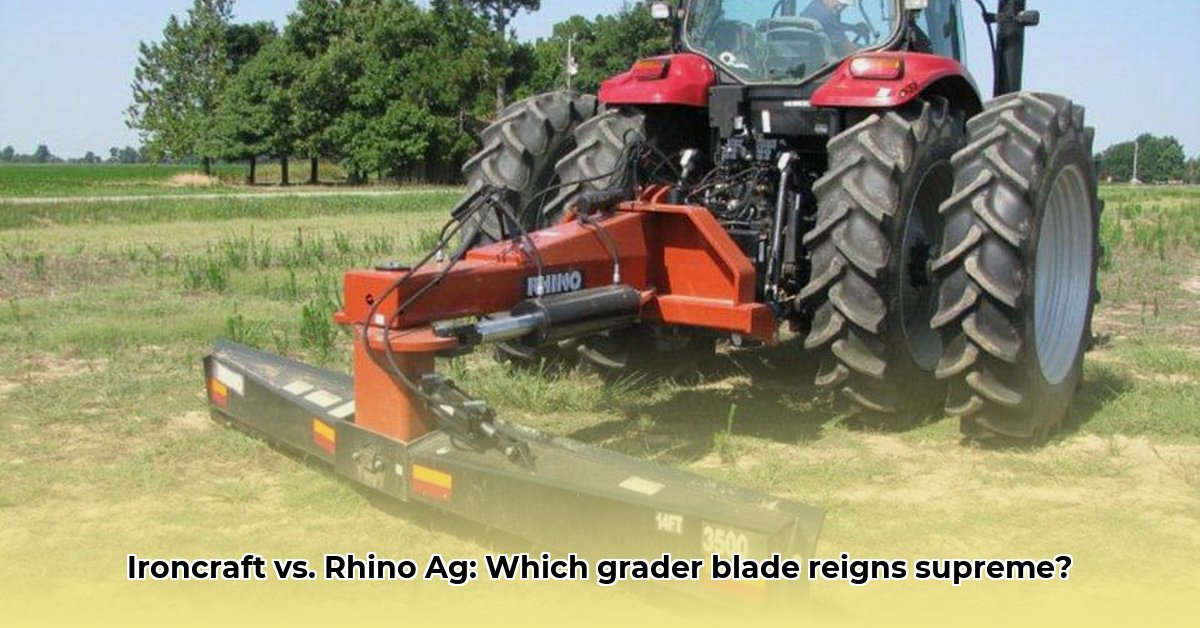
Choosing the right grader blade is crucial for efficient and cost-effective land management. This comparative review analyzes Ironcraft 4500 Series and Rhino Ag blades, helping you select the ideal option for your tractor and operation. We'll delve into features, cost, and long-term considerations to ensure you make an informed decision. For more information on rear grader blades, check out this helpful resource.
Key Differences: Ironcraft 4500 vs. Rhino Ag
Both Ironcraft and Rhino Ag offer durable grader blades, but their suitability varies greatly depending on the scale of your operation and your budget. Ironcraft 4500 Series blades are designed for smaller tractors (45-75 horsepower), focusing on affordability and simplicity. Rhino Ag blades, conversely, are engineered for larger tractors (300+ horsepower), prioritizing speed, precision, and durability for extensive applications. This fundamental difference in scale should be your primary consideration.
Blade Features and Specifications
This section details the key features and specifications of each blade, highlighting their strengths and weaknesses.
Adjustment Mechanisms: Manual vs. Hydraulic
Ironcraft 4500 series blades utilize manual adjustment levers for angle, tilt, and offset. This simplicity results in a lower initial cost, appealing to budget-conscious users. However, manual adjustments require more operator time and effort, potentially impacting precision. Rhino Ag blades typically feature hydraulic adjustments, providing swift and precise control from the tractor seat. This boosts operational efficiency, especially beneficial for large-scale tasks. However, hydraulic systems increase the initial cost and introduce potential points of mechanical failure, necessitating maintenance and potential repairs.
Rhetorical Question: Given the trade-off between initial cost and operational efficiency, which adjustment mechanism best aligns with your priorities and budget constraints?
Cutting Edge and Durability
Ironcraft 4500 series blades typically feature a smaller cutting edge (6 inches) which, while durable, will wear down faster compared with heavier-duty blades given consistently challenging soil conditions. Rhino Ag blades offer larger cutting edges, usually 1/2-inch by 6 inches or greater, resulting in generally longer lifespan, especially in tough conditions. Though both brands use high-strength steel, the larger cutting edge on Rhino Ag provides greater resistance to wear and tear.
Quantifiable Fact: A larger cutting edge typically translates to a longer blade lifespan, reducing replacement costs over time.
Tractor Compatibility and Hitch Systems
Ironcraft 4500 blades typically fit Category I and II hitches. Rhino Ag blades often boast broader compatibility, including Category 1, 2, 2QH, 3, and 4 hitches, accommodating a wider range of tractors. Always consult your tractor's manual to ensure compatibility before purchasing. Incorrect hitch selection can lead to equipment damage and safety hazards.
Pricing and Cost Considerations
While precise pricing varies by retailer and specific model options, Ironcraft 4500 series blades generally offer a lower initial purchase price. Rhino Ag blades, due to their greater complexity and larger size, command a higher upfront cost. However, the increased durability and efficiency of Rhino Ag blades could lead to lower long-term operational costs.
Human Element: "The initial cost might seem higher with Rhino Ag, but the long-term savings in reduced downtime and replacement costs were a decisive factor for us," says John Miller, owner of Miller Farms.
Decision-Making Framework: Choosing the Right Blade
The following table summarizes the key differences between the two brands, assisting you in making an informed decision.
| Feature | Ironcraft 4500 Series | Rhino Ag |
|---|---|---|
| Horsepower | 45-75 HP | 300+ HP |
| Price Point | Lower initial cost | Higher initial cost |
| Adjustment Type | Manual; Simpler, but less precise and slower | Hydraulic; Faster, more precise, but complex |
| Cutting Edge Size | Smaller (6") | Larger (often 1/2" x 6" or greater) |
| Hitch Compatibility | Typically Category I & II | Wider compatibility (CAT 1-2, 2QH, CAT 3-4) |
| Best Suited For | Smaller farms, budget-conscious, infrequent use | Large-scale operations, demanding applications |
Risk Assessment and Regulatory Compliance
Regardless of the chosen blade, prioritize safety. Manual adjustment systems (Ironcraft) might lead to slower operation but eliminate the risk of hydraulic system failures. Hydraulic systems (Rhino Ag), while offering greater speed and precision, require regular maintenance to minimize the likelihood of mechanical failures. Always comply with all relevant safety regulations and standards for your region.
Conclusion: Matching the Blade to Your Operation
Selecting between Ironcraft and Rhino Ag grader blades depends heavily on your specific operational needs and budget. Smaller farms with limited budgets and infrequent use might find Ironcraft's affordability and simplicity ideal. Large-scale operations demanding efficiency and precision will generally benefit from Rhino Ag's hydraulic adjustments and enhanced durability. Thoroughly consider the factors discussed above to choose the best blade for your unique circumstances.